


This is the first chapter of my high school research project about Dostoevsky and his relationship with nihilism. It’s a concise history about the Russia that the writer lived in, capturing the position of the Tsars, the peasantry and the Russian intellectuals. The information is largely taken from the early chapters of Orlando Figes’ book: A People’s Tragedy: The Russian Revolution.
§1.1: The Tsarist Regime
The Tsar in Conflict with Democracy
Throughout the 19th century, Russia was ruled by the Tsar. The Tsar held absolute power; Russia was essentially an absolutist state governed by an ancien régime. Russia was Orthodox, and the Christian faith played a major role in the daily lives of Russians. In Russia, the church and the Tsar were inextricably linked. The Tsar governed the church; as state property, churches received their salaries from the Tsar. The church, in turn, proclaimed to the illiterate peasants that the Tsar was chosen by God, and that by honoring and obeying the Tsar, one honored and obeyed God. This granted the Tsar a sacred status in Russia as both an autocratic despot and a religious symbol. To be Christian was to serve the Tsar. Thus, a mutual dependence existed in which both parties derived power from each other.
To maintain the autocracy of the Romanov family, Tsar Nicholas I tried to mythologize the image of the Tsar as much as possible among the populace. In addition to the sacred status obtained through the church, they achieved this by building upon the rich history of the Romanovs and portraying past rulers as heroes. All of this was designed to affirm the permanence of the autocracy; throughout the 19th century, and particularly toward its end, the West had democratised.
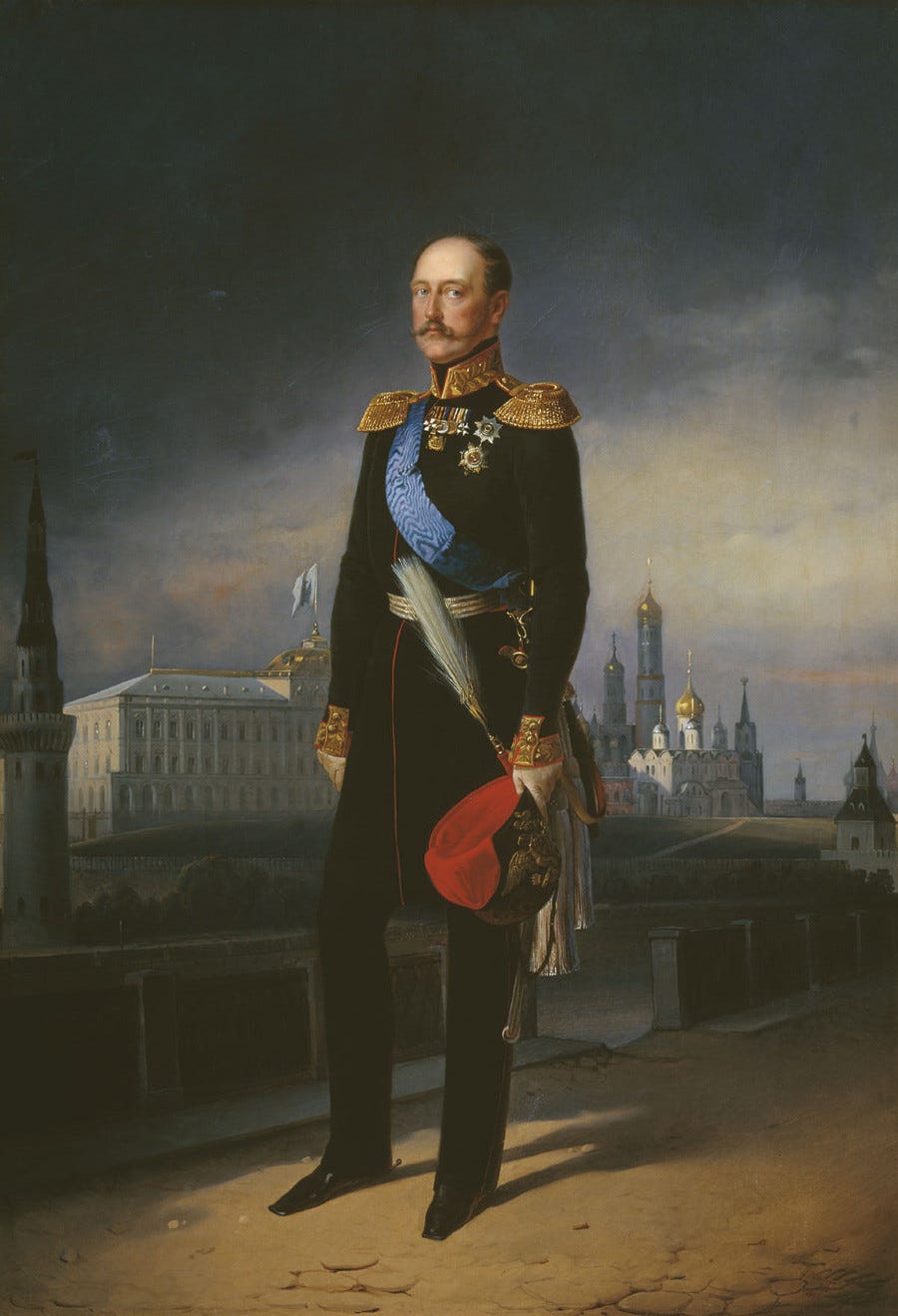
Autocracy was no longer the norm, and the Tsar’s right to rule was increasingly challenged by emerging democratic movements in Russia. Their reaction was to restore the ancient glory of the Tsardom and reintroduce old, medieval principles. They did this by readopting the principles of the Muscovite Tsardom, the archaic system used until the second half of the 18th century, within their empire. One of those principles was ancient patrimonialism, which entailed that the Tsar owned the state as personal property, just as in the Middle Ages. The other was depicting the Tsar as the embodiment of God on earth. The Tsars clung to these principles until the end of their reign in 1917.
In the eyes of the ordinary Russian peasant, the Tsar was viewed not merely as a royal monarch, but as a father figure: one who knew all the peasants by name, understood all their struggles, and, were it not for the evil nobles surrounding him, would gladly fulfill all their wishes. Tsar Nicholas I, who ruled from 1825 to 1855, even commissioned a biography of himself in which he was portrayed as “the father of the people,” who would “pay special attention to the welfare and moral development of the populace.” All this served the purpose of maintaining the Tsar’s mythical status and, with it, his right to rule as an autocrat.
The Tsars of the 19th Century
In the year 1801, during the era of Napoleon, Tsar Alexander I ascended the throne. Despite an initial good relationship with the French emperor, they eventually became embroiled in a war because Napoleon sought to claim the Russian Empire for himself, an endeavor doomed to failure. As victor of the Napoleonic Wars, the Tsar initiated the creation of the Holy Alliance: a pact between Russia, Prussia, and Austria aimed at curbing the secular and liberal ideas of the French Revolution.
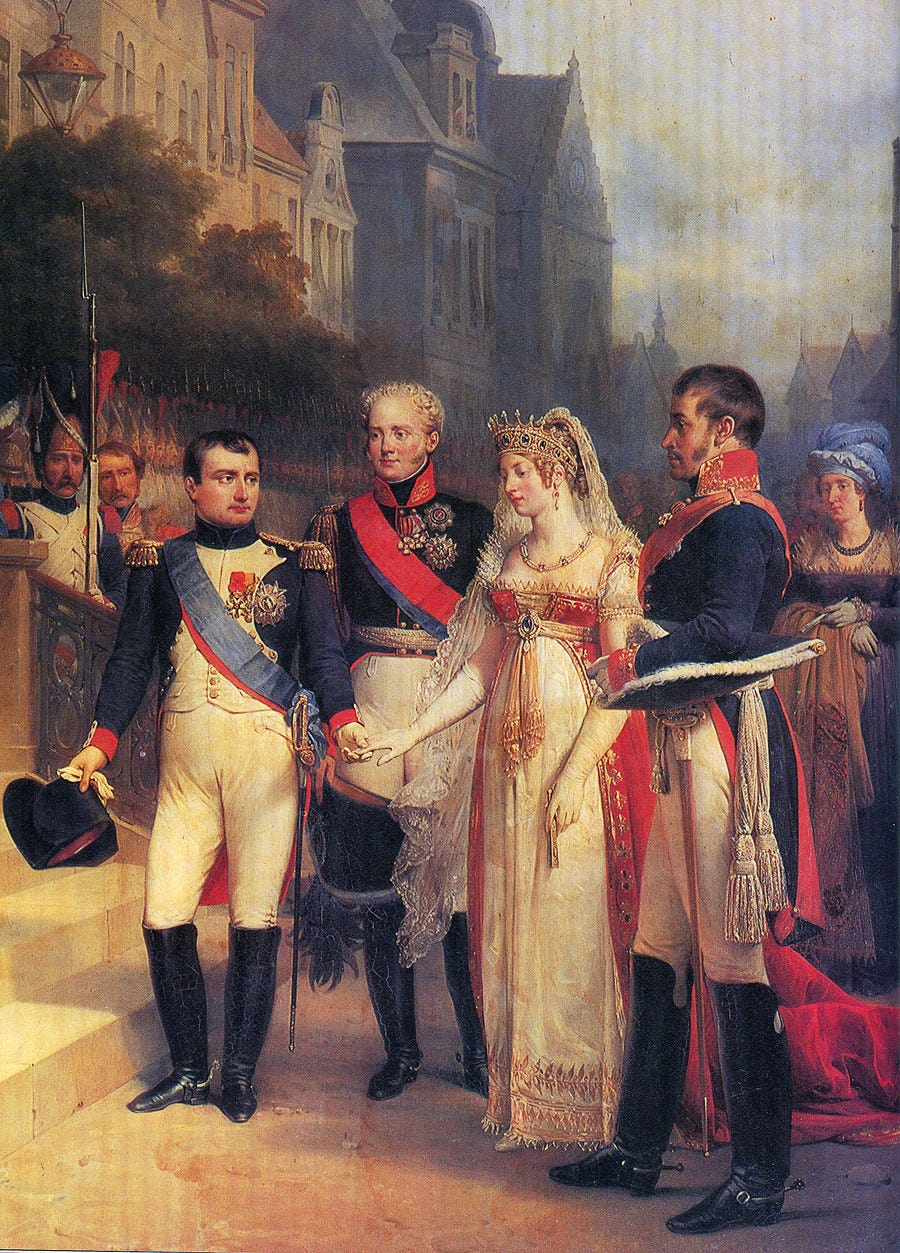
When Alexander I died in 1825, his brother Nicholas I was designated as the new Tsar. Nicholas I was fiercely authoritarian and conservative; he was disgusted by revolutions and determined to guard the existing order. Consequently, he brutally suppressed an uprising in Poland. Although the public called for social reforms similar to those in neighboring Western countries, he refused to implement them and instead tightened censorship. Despite his conservatism, he did wish to introduce one social reform: the abolition of serfdom. Ultimately, his advisors restrained him, and the reform was not enacted. On his deathbed in 1855, he made his wife promise that Alexander, his successor, would be aided in abolishing serfdom.
His successor, Alexander II, was considerably more progressive in contrast to his conservative father. He modernised the army, relaxed censorship, and abolished serfdom. Despite his progressive policies, there were clear boundaries, such as when he crushed an insurrection after introducing military conscription for Poland in 1863. However, the young radicals of Russia were disappointed by what Alexander achieved through his reforms; discontent mounted, and the notion took hold that only terrorist attacks could bring about necessary change.
This led to several assassination attempts on the Tsar. The first occurred on April 4, 1866, carried out by a student named Dmitry Karakozov; the Tsar survived. However, this caused the Tsar to backtrack on all progressive reforms: he dismissed liberal officials and strengthened the Third Section, the Tsar’s secret police, appointing the aggressive Shuvalov as its chief.
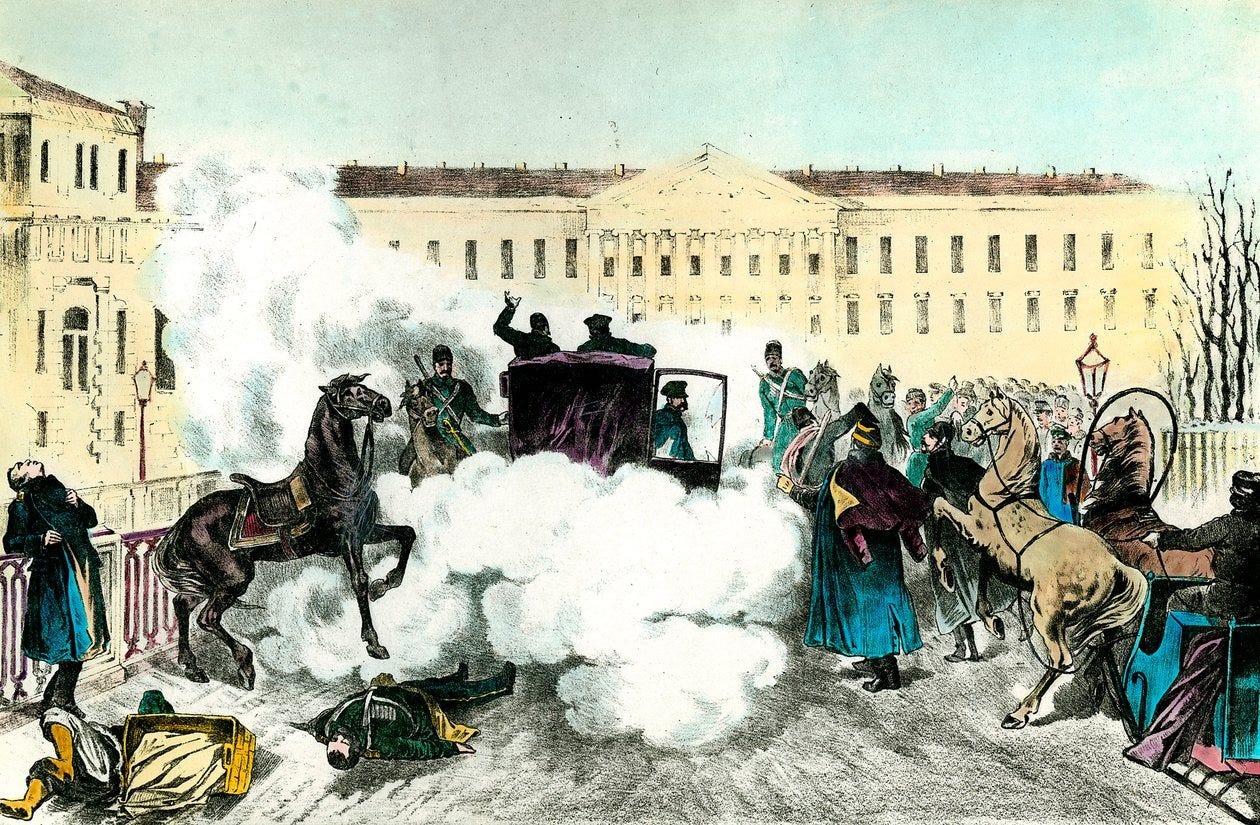
Due to Shuvalov’s harsher measures, the radicals in turn grew more aggressive. During a visit to Paris in 1867, another attempt was made on the Tsar’s life, which he again survived. Terrorist nihilism emerged, groups of young people who rejected all moral principles and authority. One of these nihilist movements, Land and Liberty, attempted to assassinate the Tsar in April 1879 while he was walking in Palace Square; a bullet grazed his coat, and he survived. Another nihilist group, People’s Will, pronounced a death sentence upon the Tsar and blew up a royal train in November, one the Tsar was supposed to be riding, but was not, once again escaping unharmed. In April 1880, the group detonated a bomb inside the Tsar’s Winter Palace, which again left the Tsar unharmed.
All these attempts caused widespread panic for the Tsar, leading him to appoint Loris Melikov to execute whatever measures were necessary to protect him. Loris introduced reforms to pacify the revolutionaries: he liberalized the press and the universities, and abolished the salt tax.
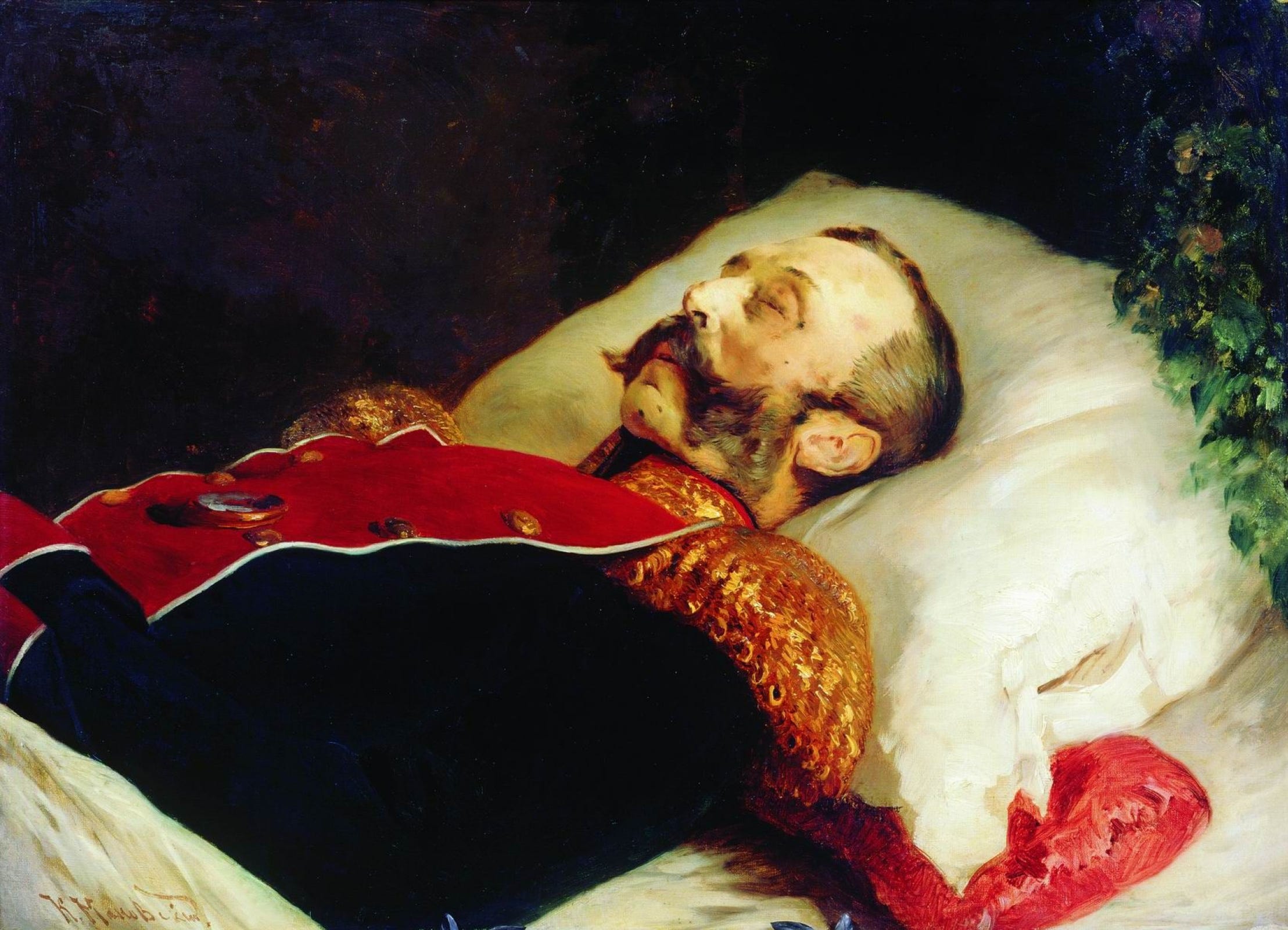
Loris reported in August 1880 that tranquility had been restored. However, a few months later, in March 1881, as the Tsar attended a military parade, another bombing took place. His luck had run out; he was wounded and bled to death that same day.
§1.2: Russian Society
A Land of Peasants and Serfs
An average Russian city was Kishinev, located in the province of Bessarabia, a region situated between the Black Sea and Romania. The “upper town” appeared quite elegant, featuring neoclassical government buildings and churches, but not far from it lay an entirely different world: a realm of narrow, unpaved alleyways, open sewers, and wooden hovels, where pigs and cows grazed in the lanes, and where cholera broke out once every three years. Thus, every Russian city presented two faces: one of imperial grandeur and one of extreme poverty.
Compared to neighbouring Western nations, civic culture was still in the early stages of development, even at the close of the 19th century. Most Russian cities had evolved as administrative or military outposts for the Tsar rather than as commercial or cultural centers. They were typically composed of a small aristocratic elite alongside a vast population of street vendors, artisans, and labourers. There was no middle class comparable to those in Western countries. The professions were too weak and dependent on the state to assert autonomy until the final decades of the 19th century, while the merchant class remained deeply fragmented.
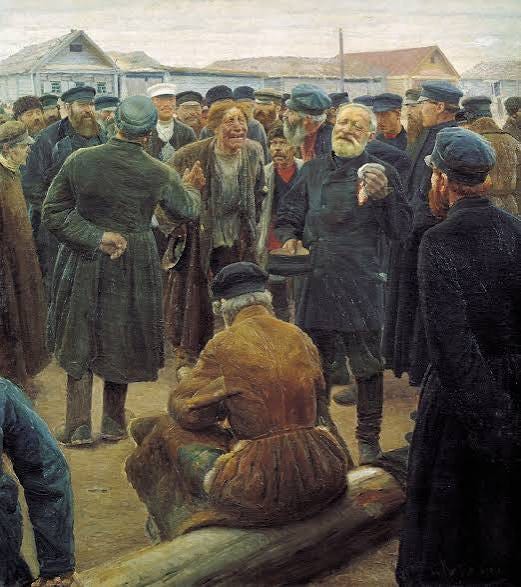
In a country as vast as Russia, it was impossible for the Tsar to govern every city alone. He therefore appointed city governors who, in exchange for their service, were permitted to “feed” themselves at the expense of the districts over which they ruled. These governors held immense power because the state failed to build an effective provincial administrative system capable of centralizing power. As a result, governors could disregard many directives from Saint Petersburg if those orders conflicted with their personal interests.
A crucial vulnerability of the Tsarist regime was the severe lack of local governance; the mythical image of an all powerful old regime was completely false. For every 1,000 inhabitants, Russia had merely 4 civil servants, compared to 12.6 in Germany and 17.6 in France. The police force was tiny by European standards; its police per capita was only half that of Italy and less than a quarter of Prussia’s. The average police officer was responsible for 50,000 citizens across dozens of villages spread over nearly 5,000 square kilometers.
Rural life in Russia was frequently romanticised by upper class students residing in the cities. They viewed peasant villages as harmonious communities, imagining the inhabitants to be more considerate of one another and chaster than those in the corrupted cities. Peasants were regarded as “noble savages.” Regrettably, this romanticised perception held by the Russian elite had no basis in reality. Peasants fed infants mouth to mouth, spat into one another’s eyes to cure styes, and used open air latrines.
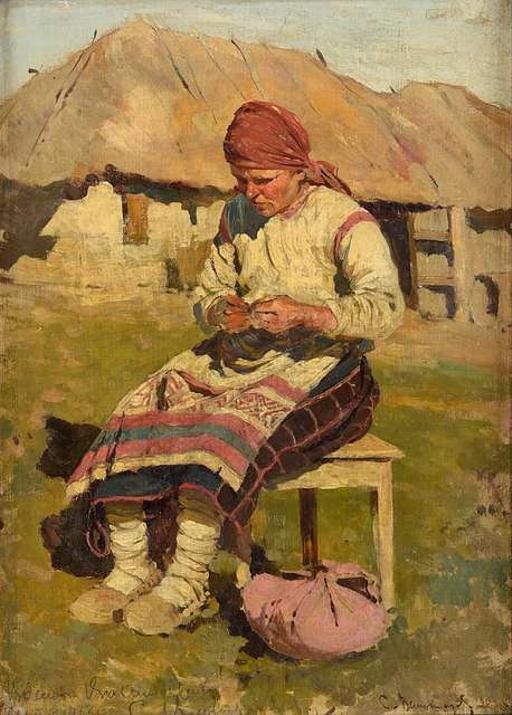
Eighty percent of Russia’s population consisted of peasants, even as the 20th century dawned. Peasants were isolated from society on virtually every level: politically, economically, culturally, and geographically. They rarely traveled beyond their small villages, fields, local churches, and markets. Until 1861, the majority of peasants were bound as serfs. This remained the reality of Russian society through the end of the 19th century.
§1.3: The Russian Intelligentsia
The Intellectual Outsiders
The Russian intelligentsia was defined less as a distinct social class and more as a group sharing a specific mindset: one of radical opposition to the Tsarist regime and a readiness to participate in its overthrow. The history of Russian revolutionaries is the history of the intelligentsia. These revolutionaries were, first and foremost, intellectuals fascinated by European history and literature, particularly the French Revolution. Lydia Dan, a Menshevik and member of the intelligentsia, remarked of the movement: “I think that as people, we were far more from books than real life.”
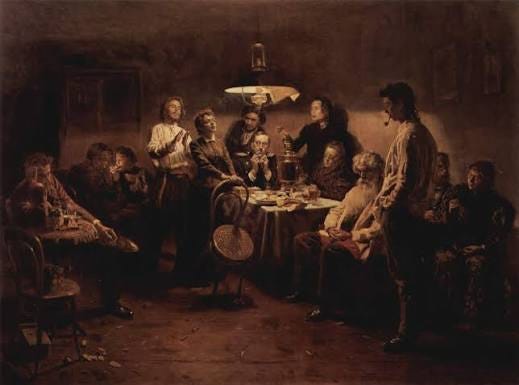
Those who joined this movement and regarded themselves as intelligenty, primarily students and writers, maintained a distinct set of values and norms, a shared style of dress, and a unique vocabulary. They gathered in salons and coffeehouses and read the same journals and newspapers. This rendered them a subculture within the upper classes from which they predominantly originated. They often shared a distinct physical appearance: unkempt, long hair and a beard.
The intelligentsia rejected any compromise with the regime; liberalism was dismissed as weakness. The law was held in contempt and deemed secondary to traditional peasant customs. Within the intelligentsia, sympathizing with terrorists was regarded as a virtue, and substantial financial donations were funneled to them.
The Russian intelligentsia was profoundly isolated, separated from Tsarist officials by their political views and from the peasantry by their education. Yet perhaps most decisive was their isolation from the Western intellectuals who inspired them. According to Isaiah Berlin, when Western ideas reached the Russian intelligentsia, they were adopted as dogma. A fundamental difference between Russian and Western intellectuals was that Western ideas were continuously challenged by competing doctrines and put to the test, whereas the Russian intelligentsia was far quicker to embrace imported Western theories as absolute truth. This was partly the result of Tsarist censorship, which banned the open expression of political ideas. Consequently, the volume of ideas entering Russia was relatively small, leaving imported theories largely unchallenged and allowing them to rapidly acquire the status of sacred dogma. The philosophical movements popular within the intelligentsia shifted over time: Hegelianism dominated the 1840s, Darwinism the 1860s, and Marxism the 1890s, each sequentially embraced as ultimate truth.
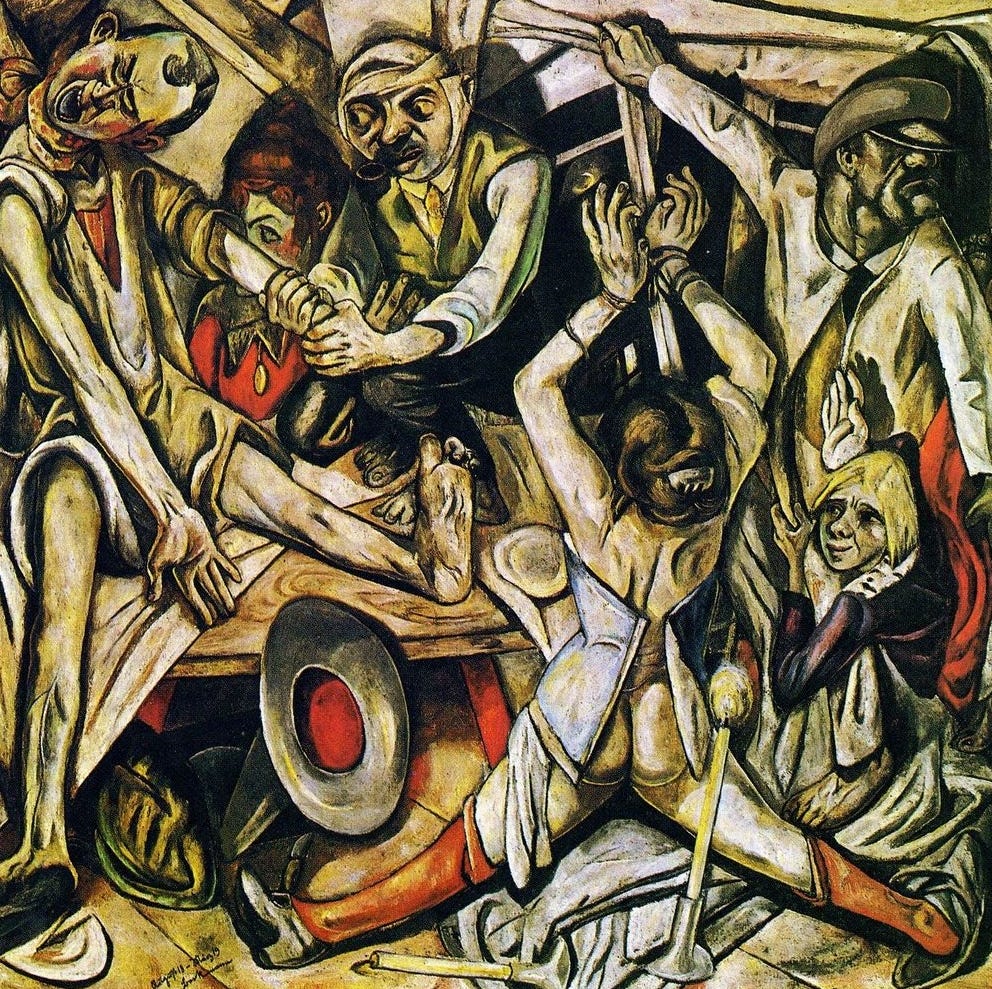
This pursuit of absolute truth characterised much of 19th century Russia’s celebrated literature. Convinced that their ideas held the key to the future, the intelligentsia divided the world strictly into supporters and opponents, friends and foes. This laid the groundwork for the totalitarian thinking that developed later among intellectuals. Guilt was frequently a driving motivation behind their revolutionary stance; hyper aware of their wealth and privilege, they sought to redeem their guilt by dedicating themselves to the revolution for “the people.” However, this “love for the people” was often abstract, a romanticised ideal. While the peasantry was viewed as sacred, intellectuals preferred to avoid interaction with individual peasants. This love in abstraction aligns closely with the thoughts of the tormented intellectual Ivan Karamazov in Dostoevsky’s novel The Brothers Karamazov: “One can love one’s neighbour in the abstract, perhaps, and even at a distance, but almost never at close quarters.”
Well-written piece! I’m enjoyed to read it in Chisinau :)
What struck me and kept ringing bells in my head was the idolisation of the Tsarism being built on the church.
Same pattern showing up everywhere 🥲💔