



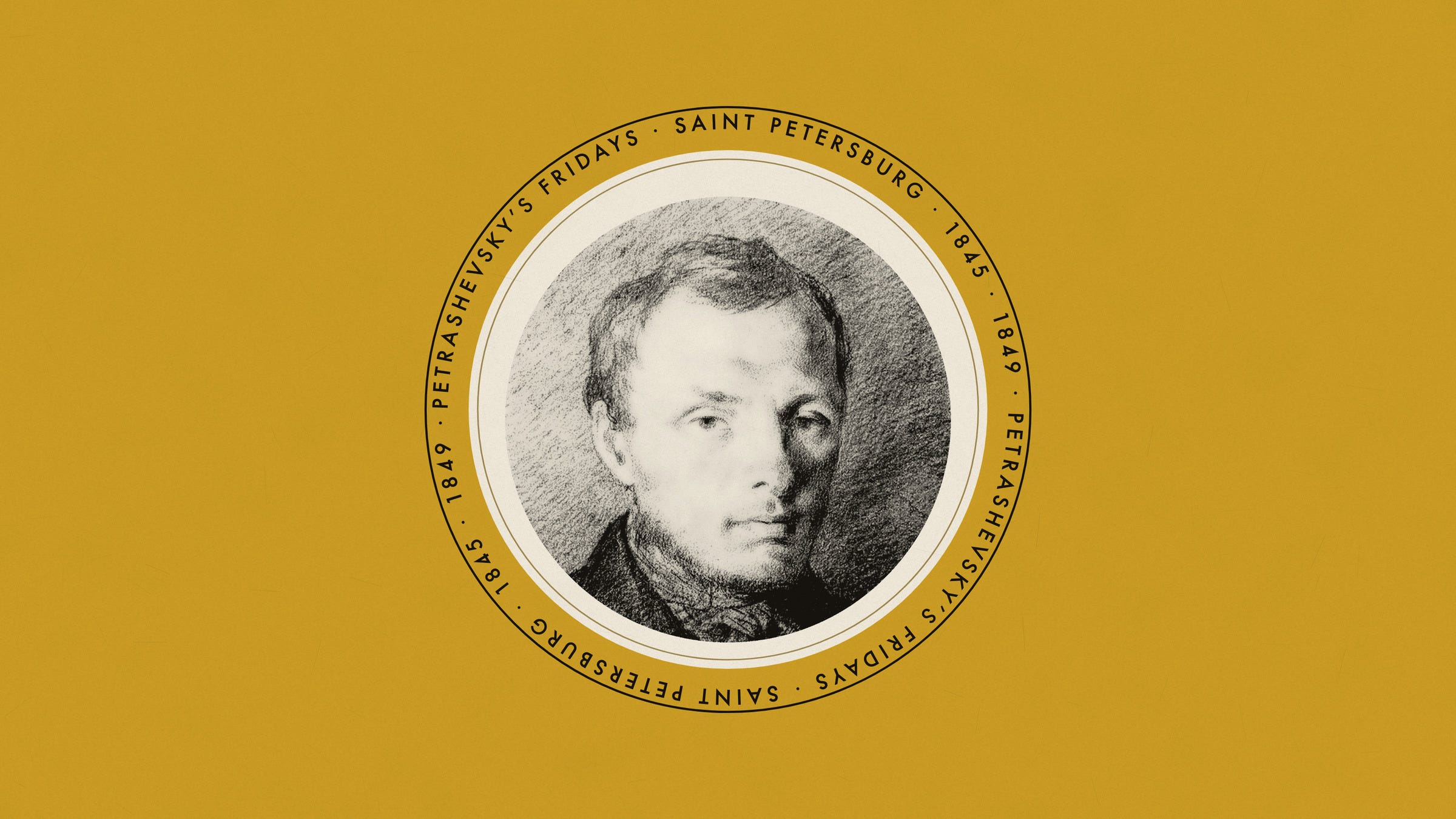
This is the second chapter of my high school research project about Dostoevsky and his relationship with nihilism. The first, Russia of the 19th Century, described the country he lived in; this one follows the young Dostoevsky himself, from his first novel to the night of his arrest.
The Rise of Dostoevsky, Poor Folk, and Belinsky
On 21 January 1846, Dostoevsky’s first novel, Poor Folk, came out in the Petersburg Miscellany, an almanac edited by the poet Nikolai Nekrasov. It is a novel in letters between Makar Devushkin, a poor copying clerk with the rank of titular councillor, the rank Russian literature used for the smallest cog in the bureaucracy, and a young woman named Varvara Dobroselova. Both are vulnerable, gentle and lonely, and their letters bring some colour into their lives, until poverty pulls them apart. Varvara cannot find a secure place in society and in the end has no choice but to accept a marriage proposal from the wealthy landowner Bykov. The book ends with Devushkin’s last, broken-hearted letter, begging her not to go, as Varvara leaves for the steppe with her new husband, never to return.
The book became a sensation in Russian literary circles, and Belinsky, the most influential critic in Russia in the 1840s, greeted it with enthusiasm. He had been calling for a new, socially minded realism in Russian literature, and Poor Folk was exactly that: Dostoevsky had written the novel Belinsky had been waiting for. When they first met, as Dostoevsky remembered it more than thirty years later, Belinsky kept exclaiming: “Do you yourself understand what it is you have written!” Belinsky was also one of the first and loudest voices of socialism in Russia, although socialism meant something quite different to him from what it means today. His was a romantic socialism, concerned with politics and the economy but just as much with the way people treat one another. In 1841 he wrote to his friend Vasily Botkin that a time would come when “There will be no rich, no poor, no kings and subjects, but there will be brothers, there will be people”. He believed so completely in the goodness of people that the political and economic consequences that would arise from it could only be self-evident.
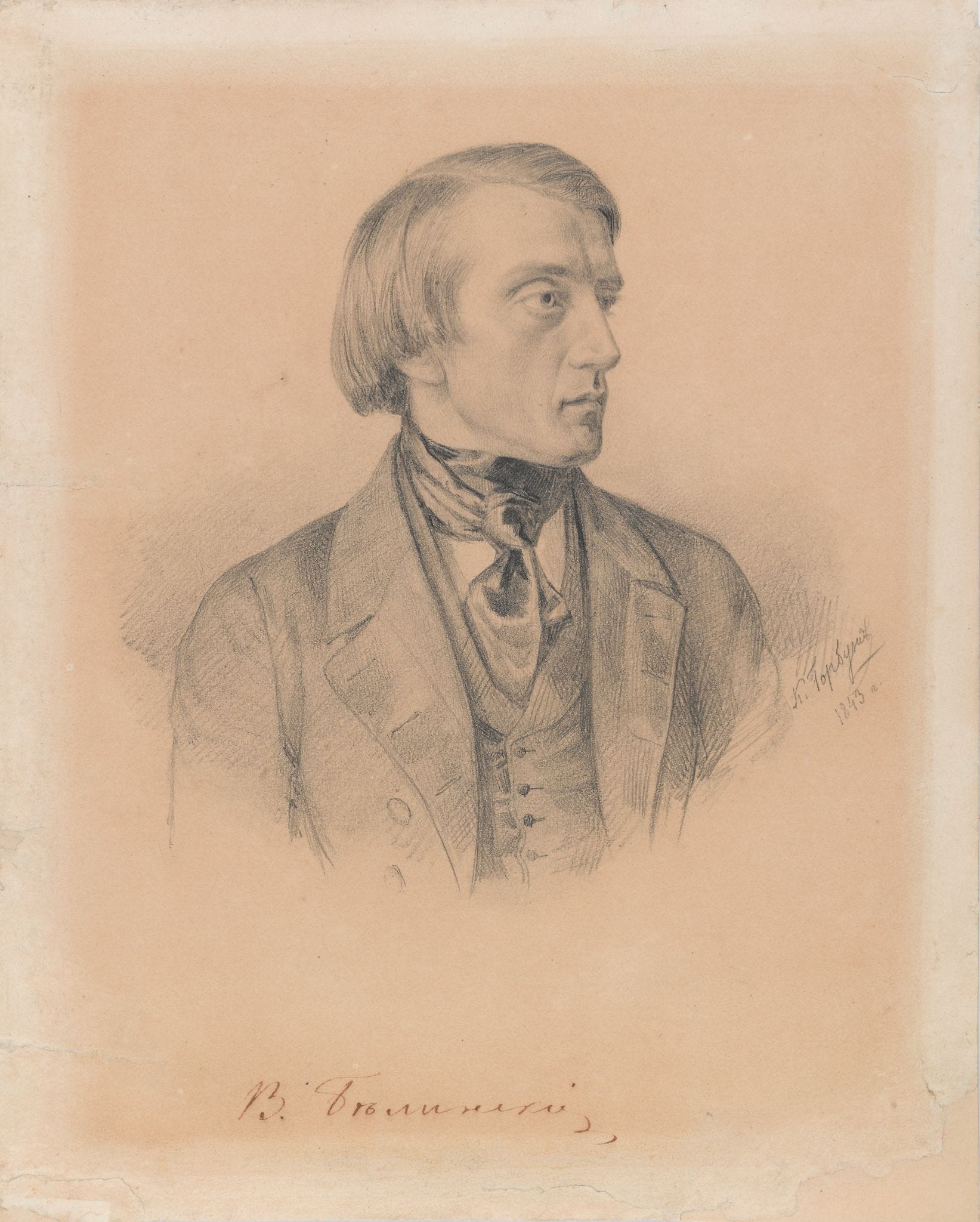
Belinsky had an enormous influence on Dostoevsky’s convictions. By Dostoevsky’s own later account, he had been an idealistic and rather naive Christian before they met. Belinsky himself had turned to French utopian socialism in 1841 and 1842, a doctrine steeped in Christian values, and Dostoevsky, who had been reading Belinsky’s articles for years, shared those ideals, which had also reached him through the novels of George Sand. Saint-Simon, one of the movement’s founders, had called his last book Nouveau Christianisme, a new Christianity, and the name fits the whole movement.
By the time the two men met in 1845, however, Belinsky’s convictions had changed: he had left the Christian element of utopian socialism behind and become an atheist. It was, in the words of Dostoevsky’s biographer Joseph Frank, the moment when atheism and socialism fused in Russia “into an alliance never afterward to be completely dissolved”. So there was a real difference between the socialism that had drawn Dostoevsky, inspired by Christian values, and the atheist socialism Belinsky now stood for.
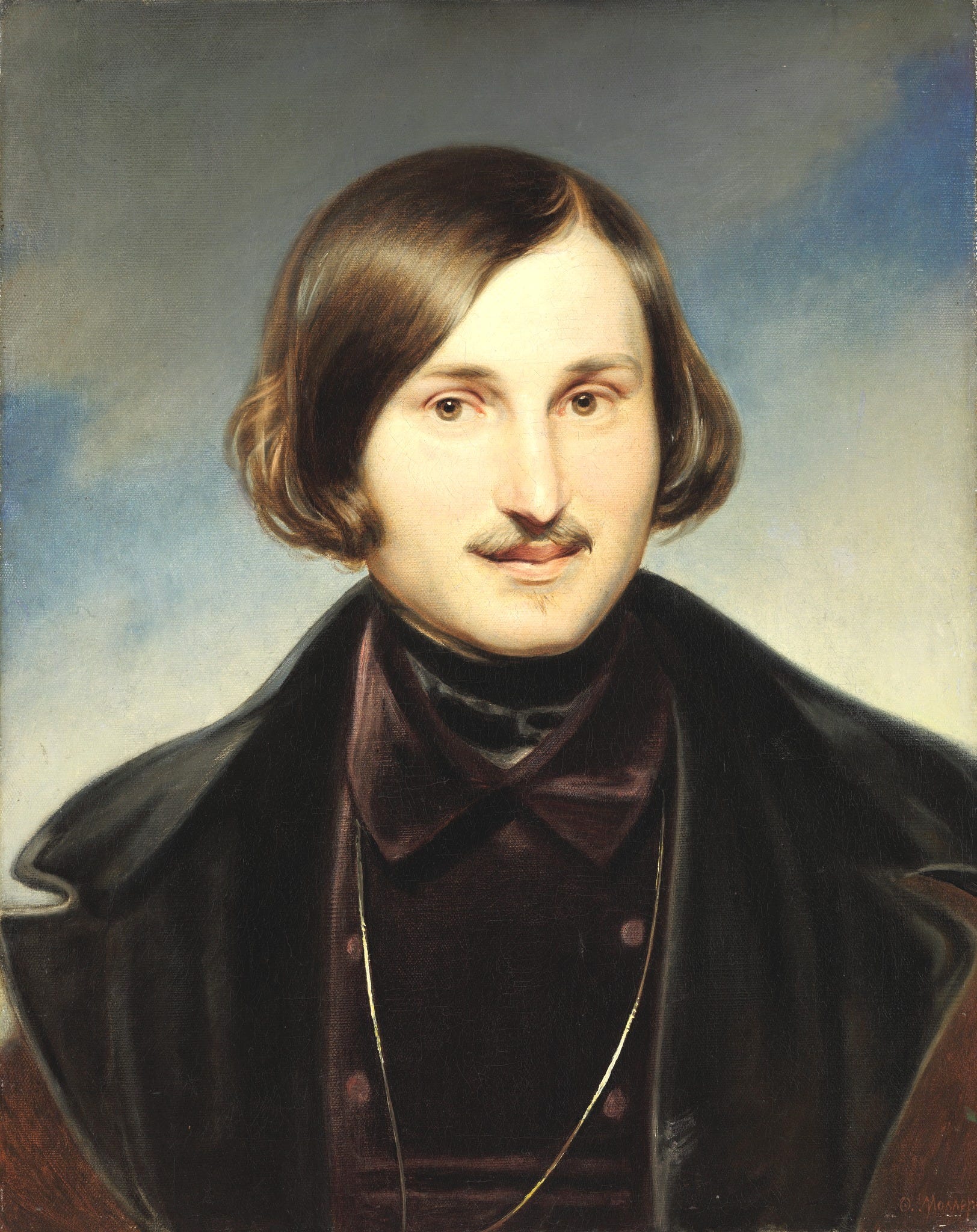
Belinsky’s praise made Dostoevsky famous in the literary circles of Saint Petersburg almost overnight, and Belinsky treated him as a close friend, in Turgenev’s memory “like a son”. The fame went to Dostoevsky’s head. On 16 November 1845 he told his brother Mikhail, “I am now drunk on my own glory”, and that everyone received him “as a marvel”. But when he began going to the gatherings of Belinsky’s circle, later called the Pleiade, it soon became clear that he was nervous, touchy and proud of his success, and the group’s writers began to tease him. His visits came to an end, after Turgenev, in front of him, made a fool out of him by imitating him in a bizarre way; Dostoevsky ran out of the room and, by Avdotya Panaeva’s account, never came back.
He stayed on good terms with Belinsky a while longer, the critic would still remain somewhat of a role-model to him. Belinsky, meanwhile, fell out with Andrei Kraevsky, the publisher of Notes of the Fatherland, left his journal in 1846 and from January 1847 wrote for The Contemporary (Sovremennik), newly taken over by Nekrasov and Panaev. Dostoevsky refused to commit himself to The Contemporary: he kept giving his stories to Kraevsky, to whom he owed money. This soured him with Nekrasov, and the break with Belinsky himself followed early in 1847. Belinsky now wrote far more critically about Dostoevsky’s work: in January 1847 he called The Double, published a year earlier, a failure, and he dismissed the stories that followed, Mr Prokharchin and The Landlady. The man who had once been his guardian angel had turned against him.
Dostoevsky’s Relationships with the Beketov and Petrashevsky Circles
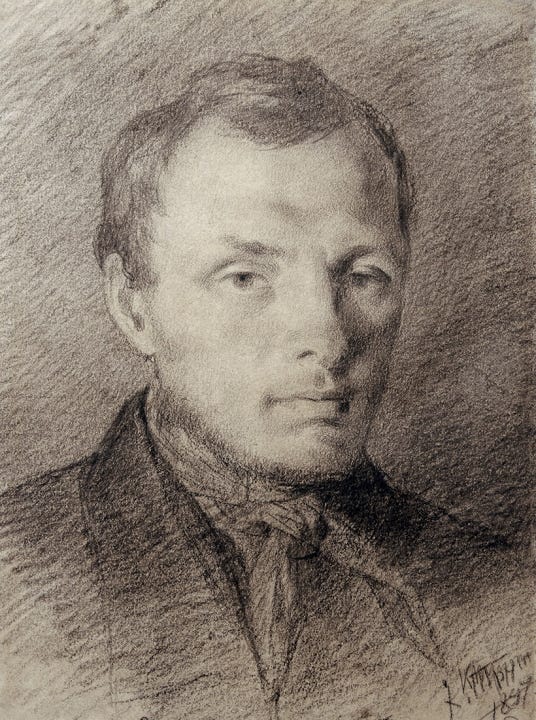
As his literary reputation began to crumble, Dostoevsky found support in the Beketov circle, and in the autumn of 1846 he moved in with the Beketovs. The circle had formed around Alexei N. Beketov, a close friend from his years at the engineering school. Here he met the young poet Aleksei Pleshcheyev, who had just left the university, and the two quickly became inseparable; they even dedicated stories to each other, Dostoevsky his White Nights (1848) and Pleshcheyev his Friendly Advice (1849). Pleshcheyev shared Dostoevsky’s belief in a Christian utopian socialism. Valerian Maikov, whom Dostoevsky already knew, was another guest, and one of the few critics who had defended him against Belinsky. In July 1847 Maikov died suddenly of a stroke while bathing. It was a heavy blow to Dostoevsky, whose nerves had been poor since 1846 and who was by then living a lonely life. A few months earlier, in the spring of 1847, he had started going to Petrashevsky’s Fridays, where his friends Pleshcheyev and Maikov were already guests.
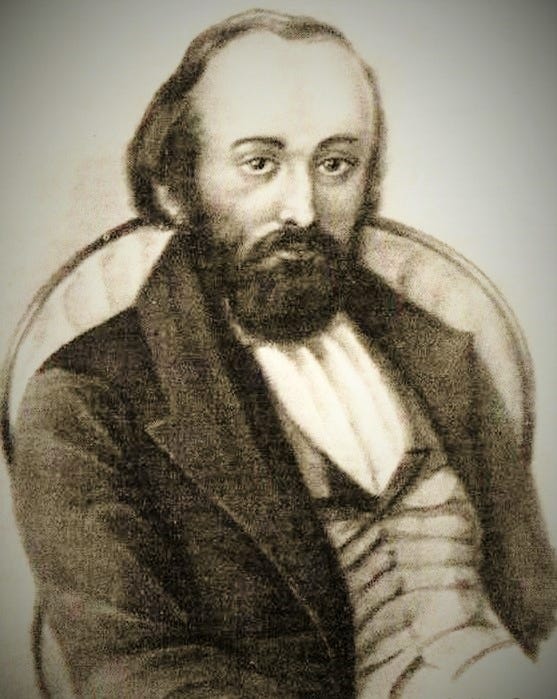
The Petrashevsky circle was a discussion group of rebellious intellectuals, organised by Mikhail Vasilyevich Butashevich-Petrashevsky. It met every Friday at his home in Saint Petersburg from 1845 until the arrests of 1849. Its members were mostly young noblemen, civil servants, army officers, teachers, students and writers, and their ideas varied as much as their professions.
Petrashevsky started the circle in his early twenties. He came from a noble family, his father a senior military surgeon, and he had been educated at the Imperial Lyceum at Tsarskoye Selo (later the Alexander Lyceum), Russia’s most exclusive school for sons of the nobility. He then studied law at the University of Saint Petersburg and also attended lectures on political economy, where he came across the new socialist systems. The one that influenced him most was the utopian socialism of the French thinker Charles Fourier.
Fourier criticised marriage, the male-dominated family and market competition, which he believed set people against one another and destroyed social harmony. His alternative was a society organised around human needs: self-sufficient communities of around 1,600 people, called phalanxes and housed in great buildings called phalansteries, living by the principle of attractive labour. People would work happily and freely only at what suited their talents and passions, and would change tasks several times a day as their interest moved. The phalanx would be run like a company: members could buy shares, and the profits would be divided between labour, capital and talent. Fourier believed that human beings were good by nature, and that evil arose only because society stopped them from fulfilling their needs.
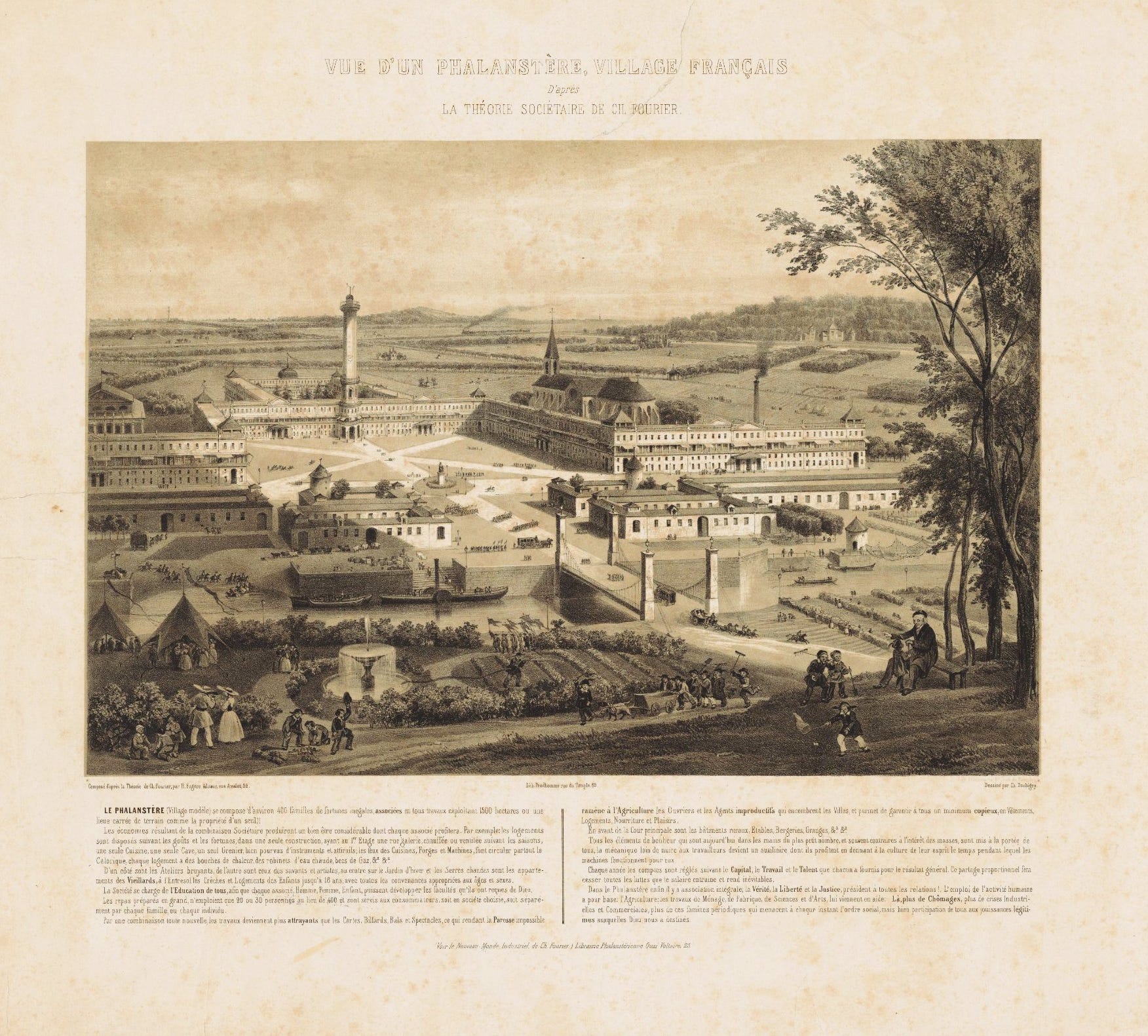
Petrashevsky had begun inviting friends round in the early 1840s to spread these ideas, and by 1845 the visits had become regular Friday evenings. By then he was a well-known figure in Saint Petersburg, and his Fourierism had changed: he had dropped most of Fourier’s theories and kept the organisation of the phalanstery, which he saw as the utopian solution for humanity, a way to turn labour from a burden into a joy. He had also replaced the religion underlying Fourierism with atheism.
At first Dostoevsky went only now and then, and the circle never meant as much to him as the Pleiade or the Beketov circle; from the autumn of 1848, though, he was a regular. He disliked Petrashevsky’s atheism as much as Belinsky’s. But he remained deeply drawn to socialism, above all because he hated serfdom, still legal in Russia, and the inequality all around him. Whenever serfdom came up, he spoke about it with an emotion the others remembered, and this may be what brought him to the attention of the more radical Speshnev. Dostoevsky joined the secret society Speshnev formed within the Petrashevsky circle, more radical and revolutionary than any discussion group before it.
The Revolutionary Dostoevsky
Nikolai Speshnev, like Petrashevsky, came from a noble family, and he was the only member of the circle rich enough not to need to work. He had spent most of the years between 1842 and 1847 abroad, where Polish émigré circles taught him how secret societies worked, and where he read everything he could find on socialism and moved from utopian socialism to egalitarian communism. The French secret societies that attracted him preached that violence was necessary, and joined their communism to atheism, materialism and utilitarianism: the belief that only matter exists, which left no room for God, and an ethics that judges every act by its consequences for human happiness, so that killing one man to save five could count as a good deed. Speshnev openly called himself a communist. Whereas Petrashevsky still hoped for gradual reform and rejected communism as economic barbarism, Speshnev wanted all the means of production in the hands of a strong central power, and believed the first step was for the revolutionaries to seize power at the first opportunity.
Speshnev was frustrated by Petrashevsky’s refusal to accept violence and revolution as the way to change. Dostoevsky himself helped him recruit: one evening in January 1849 he tried to win over the poet Apollon Maikov, Valerian’s elder brother. The involvement weighed on him. His doctor, Stepan Yanovsky, noticed that late in 1848 he had become gloomy, more irritable and touchy, quick to take offence at trifles, and often complained of dizzy spells. Dostoevsky later told him the cause: he had borrowed about five hundred silver roubles from Speshnev, “and now I am with him and his”. “Do you understand,” he said, more than once, “that from now on I have a Mephistopheles of my own?”
Do you understand that from now on I have a Mephistopheles of my own?
The group planned to spread propaganda and wake political consciousness among Russia’s oppressed peasants and soldiers. They wrote texts meant to persuade the peasants that revolt against oppression, even killing their masters, was what God wanted. They first proposed copying their texts on a home lithograph, a press that prints from stone, but the idea was dropped in the Palm-Durov circle, a smaller group close to Petrashevsky’s, and Speshnev’s men then secretly ordered the parts of a printing press. Dostoevsky’s own part is on record. He read Belinsky’s Letter to Gogol aloud, first at Durov’s and then, on 15 April 1849, at Petrashevsky’s: the letter that calls Russia “the terrible spectacle of a country where men traffic in men” and names “the abolition of serfdom” first among “the most vital, pressing national questions in Russia today”. After his arrest, the evidence that he had spread this letter weighed heavily against him.
1848, the year of revolutions across Europe, alarmed the Tsar: the monarchy fell in France, uprisings shook the Habsburg Empire and revolutions spread across the German states. Nicholas I wanted every possible threat to his rule removed, and after more than a year of police surveillance, with an informer named Antonelli sitting in on the last Fridays, the arrest of the Petrashevsky circle was ordered, Dostoevsky included.
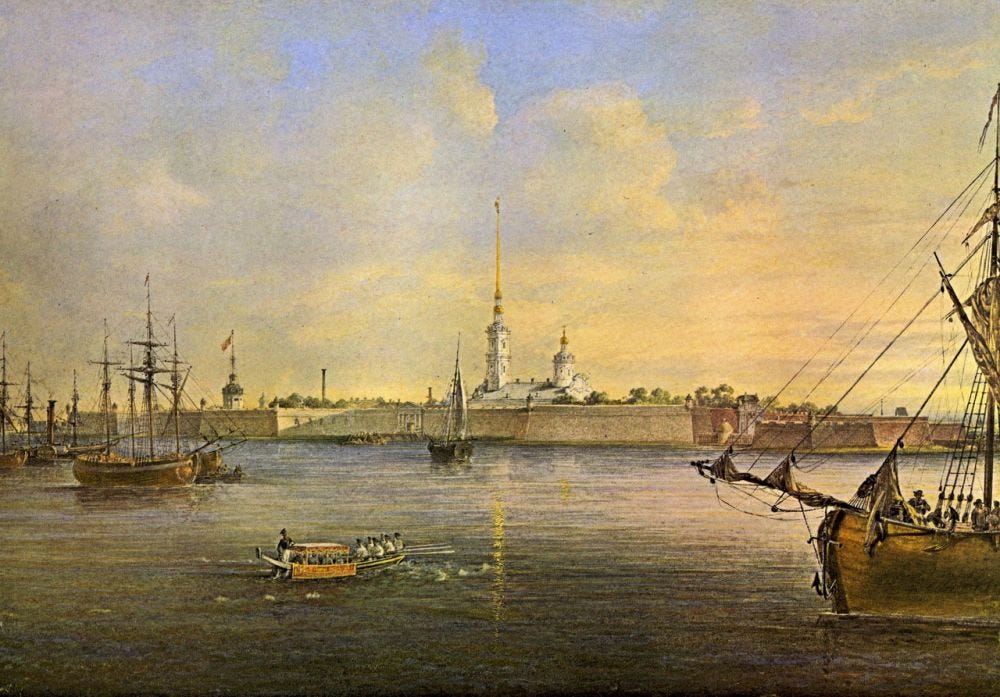
On the night of 22 to 23 April 1849, Dostoevsky came home at about four in the morning from an evening at the flat of his fellow conspirator Nikolai Grigoryev, went to bed and fell asleep at once. Less than an hour later, half asleep, he noticed strange people coming into his room: a lieutenant-colonel in the light blue uniform of the gendarmes, the Third Section’s police, and at the door a soldier, also in blue. “Get dressed,” he was told. “We’ll wait.” While he dressed, they went through his books.
Dates are in the Russian calendar of the time. The words of Joseph Frank are from his Dostoevsky: A Writer in His Time (Princeton, 2009).
it’s philosophy is free: a new essay most weeks, on one question from everyday life.
If you know someone who is reading Dostoevsky, send them this.
Floris, I had no idea Dostoevsky's early literary success was followed by so much tension with the very people who had praised him. His remark about having his own Mephistopheles after borrowing money from Speshnev caught my attention. And that scene of the police entering his room before dawn is chilling. It's strange to imagine the author we know today as a young man caught up in all this.